2026-09-14 · Randy Holt
How Hail and High Winds Damage Flat Roofs in Waco
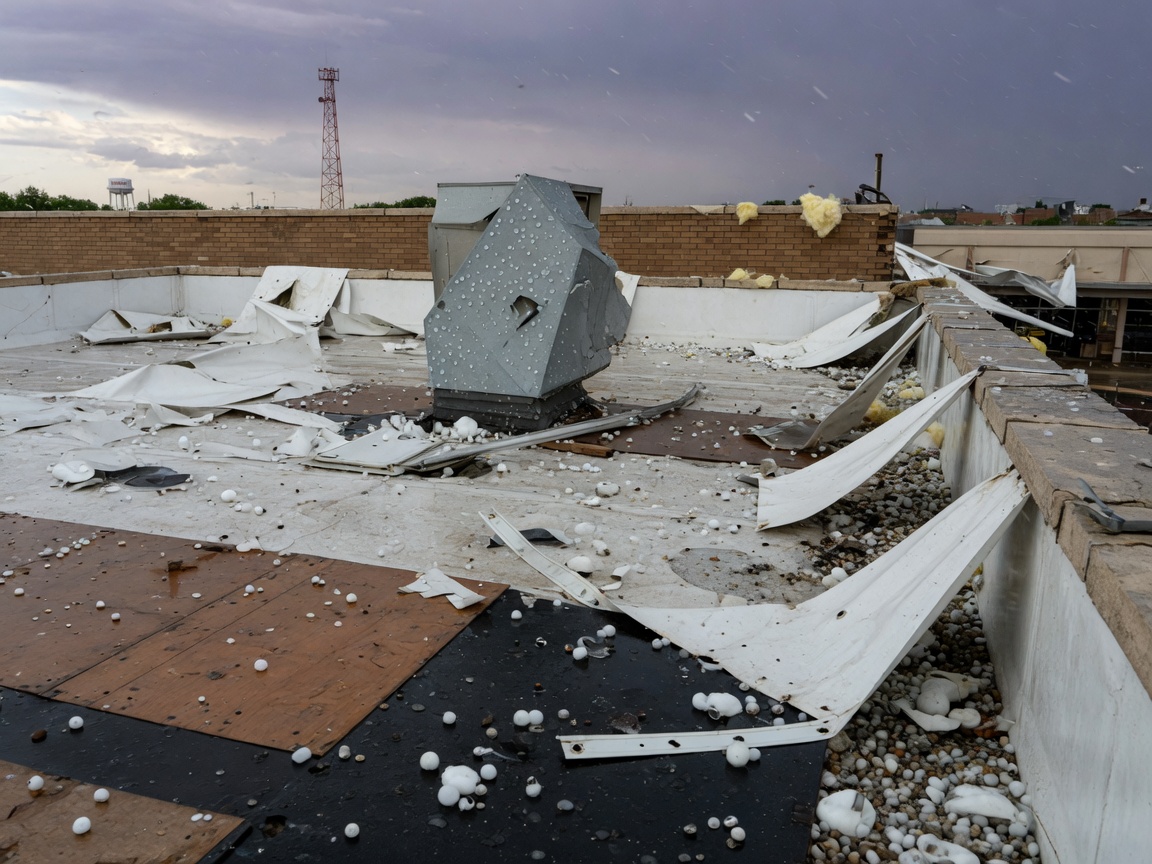
Hailstones 1–2 inches across driven by 50–70 mph winds during Waco spring storms create punctures and cracks in flat roof membranes on homes and small commercial buildings in East Waco, Sanger Heights and Dean Highland, while sustained gusts tear seams and displace ballast on older modified bitumen and EPDM systems common in McLennan County.
Hail Impact Patterns on Flat Roofs
Hail strikes flat roofs at near-vertical angles in open Waco lots, concentrating damage along ridges and around penetrations where membrane thickness is already reduced by UV exposure. In neighborhoods with 1950s–1970s housing stock such as Dean Highland and North Waco, granule loss on modified bitumen leaves the underlying felt exposed after even one 1.5-inch hail event. Larger stones can fracture the top ply without immediate leaks, allowing water entry only after repeated spring storms typical of the region. Homeowners near Baylor University often notice small craters that collect debris and accelerate deterioration during the hot humid summers that follow.
High Wind Damage to Seams and Flashings
Winds exceeding 60 mph common in McLennan County frontal systems catch the loose edges of flat roof systems on low-slope structures in West Waco and South Waco, peeling back membrane laps that were never fully adhered. Ballasted roofs lose stone coverage when gusts funnel between buildings near the Waco Suspension Bridge corridor, exposing insulation to moisture. In Sanger Heights, older parapet walls with deteriorated counterflashing allow wind-driven rain to enter wall cavities after the membrane lifts. These failures appear most often on roofs 12–18 years old that have already endured multiple seasons of mild winters followed by sudden temperature drops.
Visible Indicators After Local Storms
After spring weather passes, check for linear splits along seams, missing granules in 6–12 inch patches, and displaced metal edging on buildings in Brookview and Richland Hills. Standing water that remains longer than 48 hours near HVAC curbs signals drainage changes caused by wind uplift. Steps to Check for Standing Water on Flat Roofs Before Summer outlines a simple inspection sequence using only a garden hose and flashlight. Granule piles at downspouts or scuppers in Austin Avenue commercial blocks also point to hail abrasion that will shorten remaining service life.
When Replacement Becomes Necessary
When punctures exceed six per 100 square feet or wind has lifted more than 10 percent of the membrane, Flat Roof Replacement restores performance faster than repeated patches. In East Waco rental properties, owners often choose TPO or EPDM overlays once leaks appear near the Dr Pepper Museum district. What Influences Flat Roof Repair Costs in Waco TX breaks down material and labor variables for McLennan County jobs. Flat Roof Leak Repair addresses isolated hail hits before they spread during the humid summer months.
Practical Next Steps for Waco Property Owners
Schedule a post-storm walk on the roof within 72 hours while damage evidence remains fresh. Note any new soft spots from the ground using binoculars, especially on structures near Cameron Park where tree cover can mask wind scouring. Contact the team at 5939 Franklin Ave during Mon–Fri 8am–6pm or Sat 9am–2pm for a targeted assessment focused on hail and wind effects rather than a full sales presentation.